10th Jyothirlinga Bhimashankar🕉️
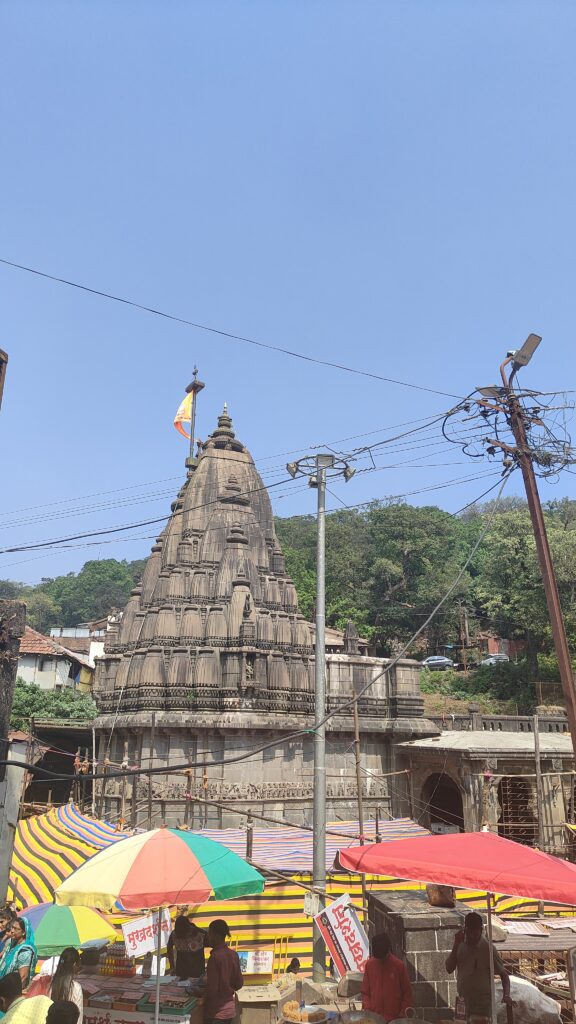
There are temples you reach by road. And then there are temples you earn. Bhimashankar is firmly in the second category — and the moment you round that last ghat bend and the mist-wrapped Sahyadri hills open up around you, you will understand exactly what I mean. 😍
We drove from Pune — about 110 km that sounds straightforward on Google Maps and is absolutely NOT straightforward once you hit the ghat section 😄 — and it was honestly one of the most beautiful drives of our entire Jyotirlinga journey. Green hills tumbling into valleys, clouds sitting so low they’re practically on the road with you, little waterfalls appearing from nowhere at every turn. The kind of drive where you keep saying “okay just one more photo stop” and then definitely stop seven more times. 📸
And then, after all those ghat turns and forest roads, you arrive at Bhimashankar. Ancient. Raw. Powerful. Absolutely worth every twist of that ghat road. 🙏
🚗 Getting Up There — The Jeep, the Wallet, and the Legs 😄
So here’s the thing about reaching the temple from the base — it involves some elevation, and you have options. We did what I would describe as the “financially motivated fitness plan” 😂
We took a jeep up — convenient, saves your knees, gets you there without arriving completely out of breath before darshan. The jeep wallahs are right there at the base and will cheerfully take you up. It is NOT cheap. We paid, winced slightly, and got in anyway because uphill is uphill. 😄
Coming back down though? We walked. And honestly — this was the better decision. The descending forest path is gorgeous, cooler, and gives you time to process everything you just experienced at the temple. The sounds of the Sahyadri forest around you, birds calling, the occasional rustle in the trees — it felt like a perfect ending to the darshan. Cheaper too. 😄 Our legs felt it the next morning but our hearts felt full so we called it even. 💚
Pro tip: Wear proper shoes. Not chappals. Not sandals. SHOES. The path is uneven and the forest floor is not interested in your footwear preferences. 👟
🏛️ The Temple — Ancient, Dark and Absolutely Unforgettable
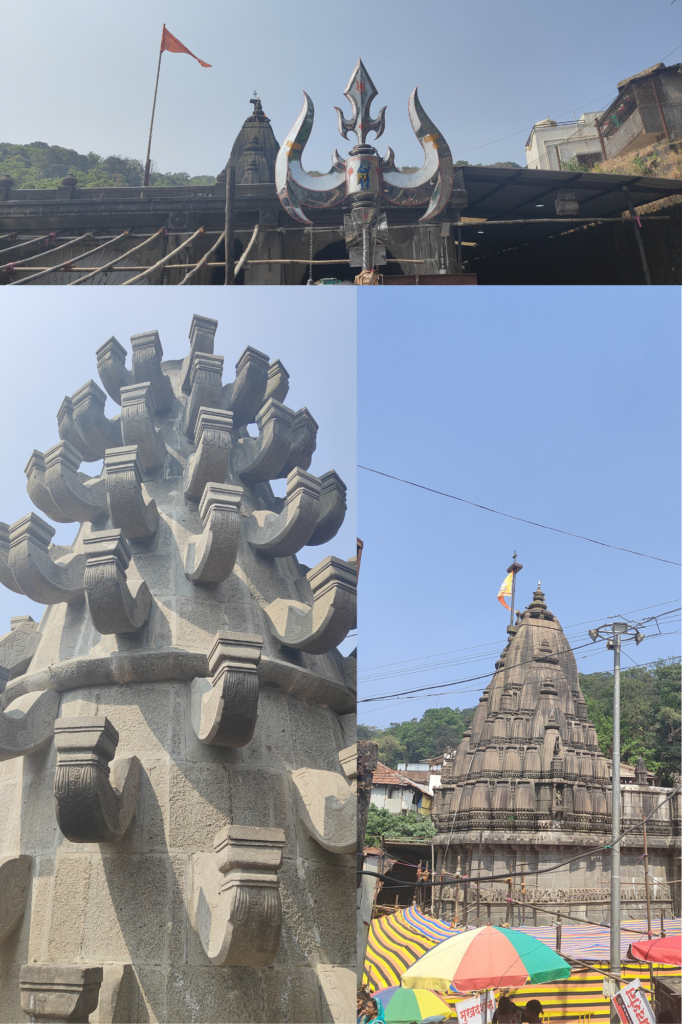
The temple dates back to the 13th century and is built in the Nagara architectural style — the shikhara (tower) added later in the 18th century by Nana Phadnavis of the Maratha empire. The stone is old, the carvings are worn in that beautiful way that only centuries of touch and weather can create, and the whole structure feels like it grew from the mountain rather than being built on it.
But it is the interior that stays with you. 🖤
It is dark. Genuinely, wonderfully, ancient-feeling dark — the kind of darkness that feels intentional, like the temple is holding something precious inside it and doesn’t want to let the outside world in too easily. The air is cool and thick with incense and camphor. The Shivalinga — believed to be a swayambhu linga, meaning self-manifested, not carved by human hands — sits in the sanctum emanating a quiet, almost electric energy.
Standing in there, in that ancient darkness, surrounded by centuries of devotion — that is the moment that doesn’t leave you. Not the drive, not the views, not the forest. That moment inside. ✨
Now — the darshan itself. Let me be real with you here because I believe in honest travel writing 😄 — the priests move you along fairly quickly. This is not a Nageshwar situation where you get extended personal time at the Linga. The queue keeps moving, and so will you. BUT — and this is important — even those brief moments inside that ancient dark sanctum are deeply powerful. You don’t need a long time in a place like this. The energy does its work quickly. Just make sure you arrive with an open, present heart rather than a distracted, phone-scrolling one. 🙏
A few things to look out for inside the complex:
- The Shani temple within the main complex — with a magnificent antique Portuguese bell donated by Chimaji Appa in 1739 after his victory over the Portuguese at the Battle of Vasai. A war trophy turned temple offering. Only India. 😄🔔
- The Kamalaja shrine — dedicated to the form of Parvati who aided Shiva in the battle against the demon
- A Nandi at the entrance, as is tradition at all Shiva temples — always stop and greet Nandi first 🐂
- Behind the temple, a narrow corridor leads to Gupt Bhimashankar — a hidden shrine where the Bhima river resurfaces underground. A short, quieter walk that is absolutely worth doing if you have the time
Final Thoughts 💫
Bhimashankar, in all its ancient darkness and forest beauty, is a reminder that the divine is never as far as we think. Sometimes it’s just six floors up a ghat road and a jeep ride away. 😊🙏
Jai Bhimashankar! 🕉️
Travel Tips ✈️🚂
Travel Mode 🧳
Flight 🛫
Pune International Airport (~105 km) direct taxis are available from airport.
Train 🚂
Pune (about 110 km away) is the nearest railway station to Bhimashankar, with onward cab or bus.
Bus 🚌
State transport buses run from Pune (Shivajinagar bus stand) to Bhimashankar. Not the fastest but very affordable and an adventure in itself 😄
Accomodation 🏨
Bhimashankar has limited but decent accommodation options right in the village — MTDC (Maharashtra Tourism) has a resort here that is the most comfortable option and gets booked up during peak season and weekends, so plan ahead. There are also some basic guesthouses and dharamshalas for pilgrims.
Many visitors, especially from Pune, do this as a day trip — drive up in the morning, darshan, walk around, and head back by evening. Totally doable. If you want a slower, more immersive experience and want to catch the early morning aarti or the forest at dawn — staying overnight is 100% worth it. Bhimashankar at dawn, when the mist is still sitting in the valleys and the birds are just waking up, is something else entirely. 🌄
Food stops 🍽️
Simple and honest — that’s the food scene at Bhimashankar, and honestly that’s exactly right for a place like this. 😊
We also found a lovely little local dhaba on the way — the kind of place with plastic chairs, mismatched steel plates and food that somehow tastes better than anything you’d eat in the city. Hot varan-bhaat (Maharashtrian dal-rice), bhakri, thecha (the spicy garlic chutney that will clear your sinuses and your soul simultaneously 😄), and chai that arrives in a glass so hot you need to hold it with your dupatta. Perfection. 🍛
Shopping zone 🛍️💳
Small but sweet. 🛒 The shops around Bhimashankar have everything you need for a pilgrim’s souvenir haul: Pooja items — rudraksha malas, bilva patra, Shiva idols, agarbatti, diyas , Religious souvenirs — framed photos of the temple, keychains, small Nandi figurines. The usual peda prasad freshly made to carry home for everyone who asked you to bring something back 🙏
It’s a small market, not a shopping destination — but you’ll find everything you need. And if you happen to spot someone selling local Sahyadri honey — do NOT walk past it. The forest honey from this region is extraordinary and a very happy thing to carry home. 🍯