Navagraha Temple Tour🕉️
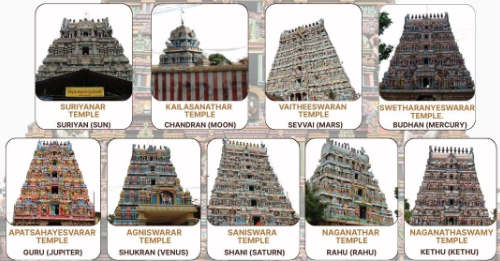
Kumbakonam! The land where the nine celestial forces have their own homes, where the Cauvery delta breathes temple bells instead of just wind.. I had heard about the Navagraha Yatra for years — every astrologer, every elder in the family, every well-meaning aunty had an opinion on it. But some yatras you don’t plan, they plan you. 🙌 And so came the call. We boarded an overnight bus from Bangalore, and honestly, waking up to the mist over the paddy fields of the Cauvery delta was the perfect start to a planetary pilgrimage. ✨🚌
Arriving Into the Delta 🛕✨
The moment the bus rolled into Kumbakonam, you sense it — this is not a city in a hurry. Temple towers rise over coconut groves, and every street seems to lead to some form of the divine. We had exactly 2 days, and a firm plan: all 9 Navagraha temples, no shortcuts.
We did general darshan at each temple, no special pooja booked in advance — just pure, unhurried devotion, temple by temple, planet by planet. And honestly? That simplicity made it feel more personal, not less.
The Nine Stops of the Sky 🪐
Suryanar Kovil (Sun) — The first stop, and it sets the tone. The temple is a complete Navagraha shrine in itself, with all nine planets enshrined around the central Surya sanctum. A quiet, powerful start to the yatra.
Thingaloor / Kailasanathar Temple (Moon) — Chandra’s temple, calm and cool, almost as if the deity’s own energy has settled into the stones. A small temple, but the atmosphere is anything but small.
Vaitheeswaran Koil (Mars) — One of the busiest and most significant stops. This is also where many come for Nadi astrology readings — palm leaf horoscopes said to have been written by sages centuries ago. We didn’t get ours read, but watching others wait with quiet anticipation was an experience in itself.
Thiruvenkadu (Mercury) — A beautiful temple with a large tank, dedicated to Budhan. The bronze icons here are considered some of the finest in the region.
Kanjanoor / Guru Bhagavan Temple (Jupiter) — Devotees believe a visit here can ease delays and obstacles tied to Guru dosha. There’s a steady, grounding energy in this temple that’s hard to put into words.
Kanjanoor Alangudi (Venus) — Not to be confused with the Guru temple, this one is dedicated to Sukran and is known for blessing marital harmony and prosperity.
Thirunallar (Saturn) — Perhaps the most famous of the nine planetary temples, and the crowds here reflect that.We happened to go on a Saturday — the day considered most auspicious for Shani Dev — which meant the rush was enormous. One ritual stood out immediately — devotees lighting small diyas filled with black til (sesame seeds), offered specifically to Shani Dev, believed to ease his harsher influences. And there’s a rule everyone seemed to follow strictly: once you’ve had darshan and started walking away, you don’t turn back to look at the temple again. We saw people quietly reminding each other of this as they left, careful not to glance over their shoulder.
Rahu Temple, Thirunageswaram — A temple entirely devoted to Rahu, which is rare. The sarpa (snake) themed sanctum and the unique abhishekam rituals here are unlike anything else on the yatra.
Ketu Temple, Keezhaperumpallam — The final stop, and fittingly, it felt like closure. A smaller, more remote temple, but the drive there along the delta backwaters was one of the most peaceful parts of the whole trip.
Every temple has its own dhanya (grain) associated with the planet, sold in small packets outside alongside colored cloth specific to the planet, in keeping with the character. Vendors lined the path leading up to the temple, and you could buy the cloth and grain right there and have a priest perform a quick pooja on the spot before you went in for darshan.
By the time we finished all nine, something had shifted — not dramatically, just quietly. Like a weight had been acknowledged, even if not fully lifted. 🙏
Why Navagraha, Why Kumbakonam? ⚖️
According to belief, the nine celestial bodies — the Navagrahas — influence every aspect of human life, and each has its own dedicated shrine within a compact radius around Kumbakonam, a geography found nowhere else in India in quite this concentrated form. Devotees undertake this yatra to seek balance among the planetary energies, to ease doshas, and simply to pay respects to the forces believed to govern fate itself.
Temple Hopping 🗺️
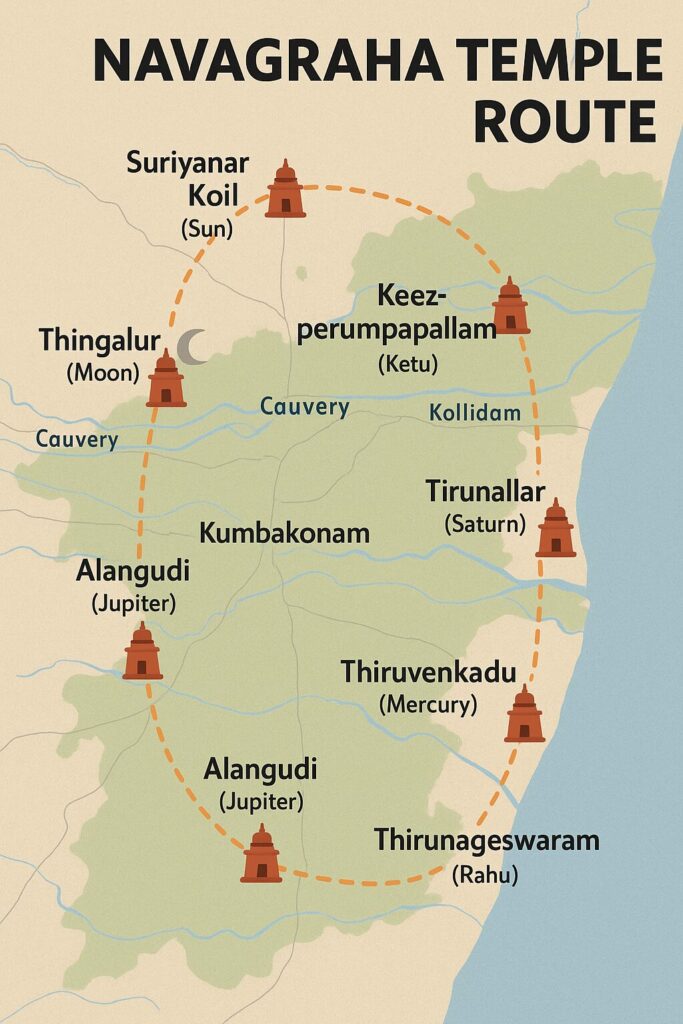
We hired a local cab for both days — non-negotiable, honestly. The nine temples are spread across a radius that makes app cabs and public transport a nightmare to coordinate, especially with darshan timings to track. We covered few more temples with these and can be negotiated with the cab person based on requirements.
Day 1 covered Suryanar Kovil, Thingaloor, Vaitheeswaran Koil, Thiruvenkadu, and Kanjanoor — a long day, but the temples flowed into each other nicely.
Day 2 was Alangudi, Thirunallar, Thirunageswaram, and finally Keezhaperumpallam — ending on Ketu felt symbolically right, like tying off a thread.
Pro tip: start early both days. Darshan queues, especially at Thirunallar, build up fast by mid-morning. ☀️
Kumbakonam is one of those places that doesn’t overwhelm you with grandeur — it works on you slowly, temple by temple, planet by planet, until you realize you’ve quietly made peace with something you didn’t even know you were carrying. This was a yatra of small, steady realizations rather than one big moment — and we will carry that with us for a long time. 🌾🕉️
I will do separate post covering travel, accommodation and other temples covered as part of package.
“Om Navagraha Namaha! 🙏”